
Litchfield County Arrest History
Torrington, New Milford, Watertown, Plymouth, Thomaston, and Winchester police make arrests within their jurisdictions. Connecticut State Police Troops A, B, and L, resident troopers, and specialized agencies also create arrest records. The correct custodian depends on the town and officer involved. State marshals handle civil process and do not replace a sheriff's criminal-records unit.
An arrest creates an agency report, fingerprints, a booking photograph, custody entries, and perhaps a court case. These records do not merge into one Litchfield County file. Police retain the incident and arrest report. SPBI receives fingerprint-supported data. Prosecutors decide what to file, Superior Court creates the docket, and CT DOC creates a correctional record only if state custody follows.
No Litchfield County Arrest Blotter
Connecticut has no Litchfield County sheriff or county jail, so no sheriff roster can provide a complete list of recent bookings. Municipal departments may publish logs or releases under their own policies. State Police issue selected releases, but those notices are not a complete arrest history. Two nearby incidents can have different custodians because one town uses municipal police and another uses a resident trooper.
The Division of Criminal Justice's local resource list helps map a town to its police department or State Police troop. Troop B serves much of the northwest from North Canaan. Troop L serves central and southern areas from Litchfield, while Troop A assists some communities. Start with place and date, not a generic county search.
Looking Up Litchfield County Arrests
A channel-complete search follows the record from police custody to court and, when relevant, state correctional custody. Gather the full name, incident town, approximate date, and agency case number if known. Those details help a records unit separate people with similar names and find material that is not indexed online.
- Identify the arresting town and check the official municipal police or State Police release channel.
- Call that agency's records or nonemergency line to confirm custody routing and its request method.
- Search the Judicial Branch daily docket and pending-case lookup for charges filed in Superior Court.
- Check CT DOC after a transfer, or request your own statewide record from SPBI.
- Submit a focused municipal FOIA request or DESPP GovQA request for the releasable arrest report.
For a filed prosecution, the Litchfield County criminal court case record gives the authoritative filed charges and outcome. It should be matched to the agency record rather than treated as a duplicate booking entry.
Litchfield State Police Report Requests
State Police arrest and incident reports use DESPP Reports and Records and its GovQA customer portal. CGS §29-10b sets a nonrefundable $16 search fee, whether or not a report is produced. Payment must arrive before the search, and online card payment may carry a convenience charge. Municipal police records must instead be requested from that town.
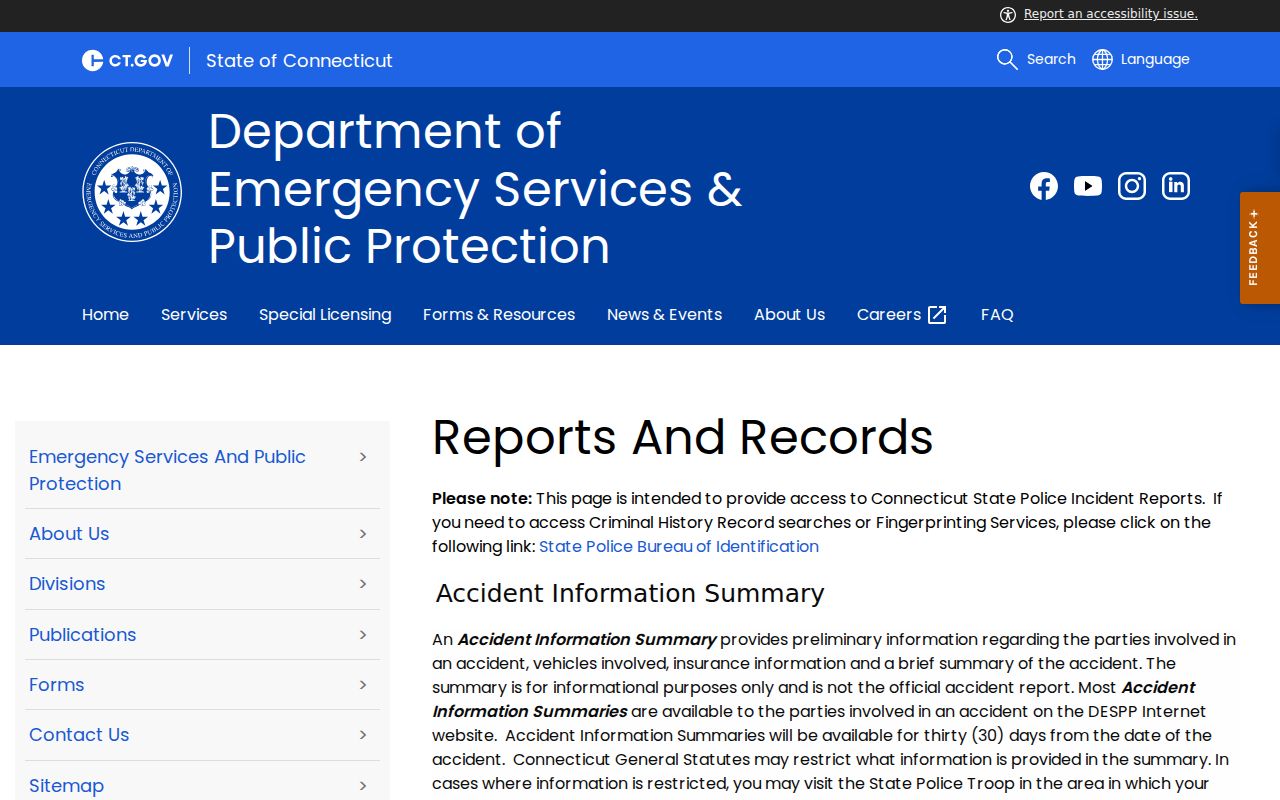
The state page is the right route for Troop A, B, or L records. Include the incident number, date, time, location, involved names, record type, contact details, and preferred delivery when known.
Inside a Litchfield County Arrest Record
The protected agency file contains more than the public copy. It can include full identifiers, medical screening, property records, and fingerprint transaction data. Connecticut FOIA exemptions and other laws may require redaction of victim information, juvenile data, witness information that creates a risk, uncorroborated allegations, and active investigative details. Ask for segregable public portions when some material is exempt.
| Agency Number | The police incident or case identifier used to retrieve the report. |
|---|---|
| Arrest Date & Time | The time custody began, which can differ from later intake or court dates. |
| Arresting Agency | The municipal department, State Police troop, resident trooper, or other agency. |
| Charges | The statutes cited at arrest, which may change before court filing. |
| Bond | Amount or type, release conditions, and scheduled court location where releasable. |
| Booking Photograph | Created during processing; public release depends on the custodian and applicable exemptions. |
| Custody Status | Transport, release, or transfer information, not a lasting county jail roster. |
Litchfield Municipal Arrest Record Routes
Torrington police records stay with Torrington, and New Milford or Watertown records stay with those departments. Each agency sets its own records form, contact route, and counter practice within Connecticut law. A courthouse request cannot substitute for the police report, even after charges reach Field Street.
The New Milford Police Department page is an official starting point for its records.
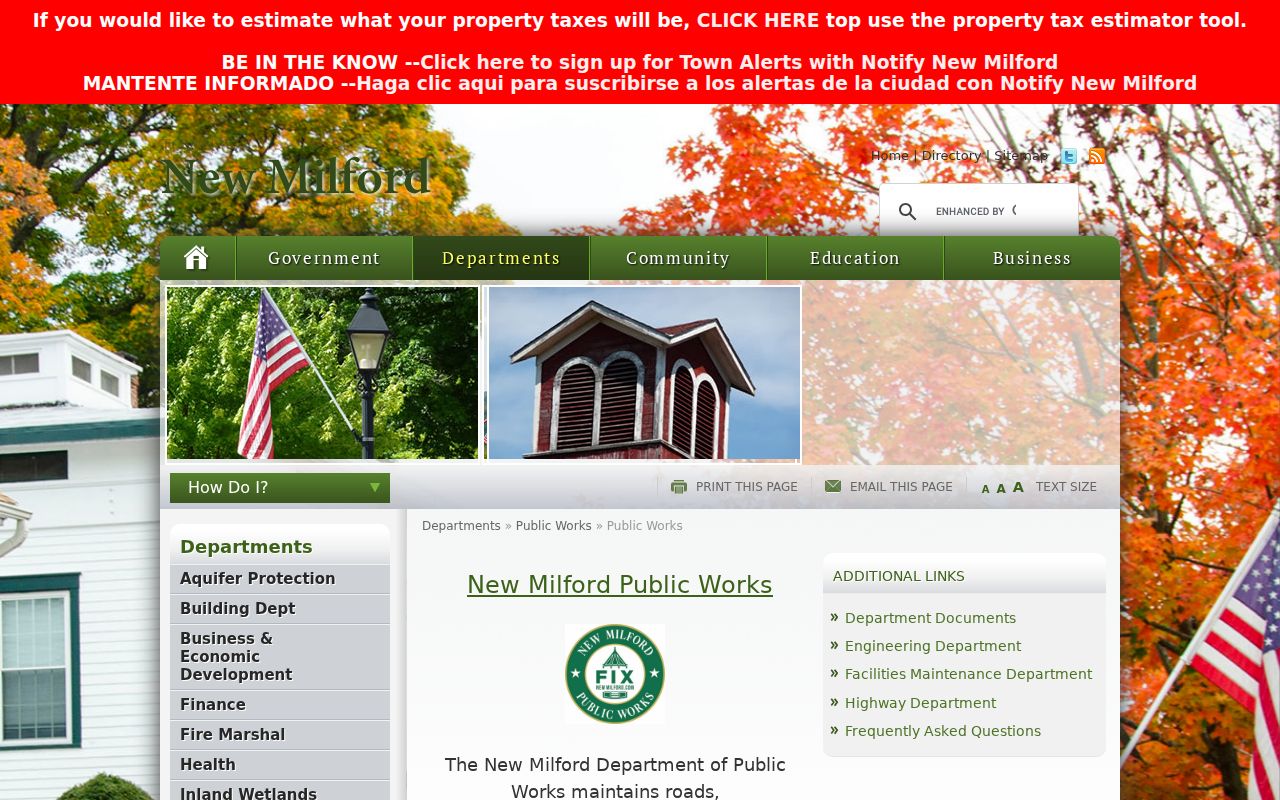
This local channel matters because no central county office receives every municipal incident report.
The Watertown Police Department likewise maintains its own contact route.
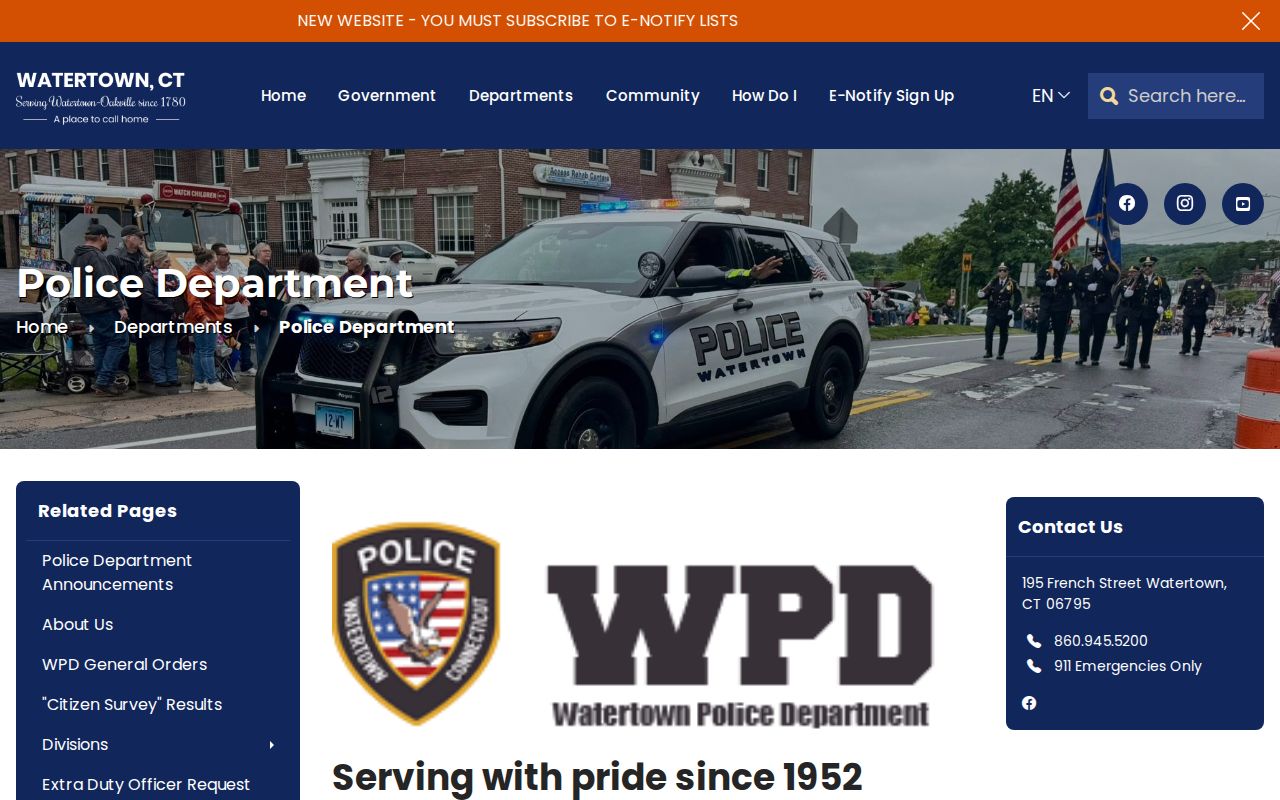
Use the department that made the arrest, then use the Torrington docket only to confirm what entered court.
Booking Logs and Recent Arrests
There is no official countywide booking log. Check the arresting department's releases, then call its records or nonemergency line. For a very recent event, the Judicial Branch daily docket can show an initial court appearance after the case is placed on the calendar. The pending-case search can then supply a docket if charges were filed.
CT DOC's offender locator is useful only after state custody or a releasable supervision status enters that system. It is not a Litchfield County booking feed, and a person held briefly by local police may never appear there. Likewise, absence from a department's current log does not prove that no arrest occurred. Records can roll off, be withheld, or remain with another agency.
Litchfield Arrest Fingerprints Reach SPBI
During custodial processing, the agency records identity data, takes fingerprints and a booking photograph, and transmits fingerprint-supported arrest information into state and federal identification systems. SPBI can then link an arrest cycle to a reported disposition. Matching gaps can occur when prints were not taken, identifiers differ, an old disposition was not linked, or an update has not posted.
For self-review, use the official SPBI process. Connecticut offers a $36 name and date-of-birth product that reports whether a record exists, a $75 Connecticut conviction-history search that supplies a copy when one exists, and a $75 fingerprint-based conviction-history search plus capture cost. CCHRS pre-enrollment is not an open public name-search portal; it requires an authorized program's service code.
A repository result may still differ from the first police charge or the public docket. Fingerprint-supported cycles help match records, but disposition reporting can lag. Compare the agency number, arrest date, docket, and final court outcome. If the record is your own and a disposition is missing, send the official correction request to SPBI or the clerk with the precise transaction and docket details.
CT DOC After Litchfield Arrests
The CT DOC Offender Information Search can be checked by DOC number, name, and date of birth. A result may show the current facility or supervision status, controlling sentence information, sentence date, and release estimates where releasable. It does not publish a county-jail mugshot profile because Connecticut uses a unified state correctional model.
Immediate custody questions still go to the arresting department. Once DOC lists a facility, use that facility's current visitation, mail, phone, and deposit instructions. Never send money or correspondence to a supposed “Litchfield County Jail.” No such jail exists.
Arrests Are Not Convictions
An arrest records custody based on a warrant or probable cause. It does not decide guilt. Prosecutors may reduce, replace, or decline the initial charges. A court may dismiss a charge, enter a nolle, acquit after trial, or record a conviction. Compare the agency record with the court disposition before describing an outcome.
| Arrest Record | Conviction Record |
|---|---|
| Created by the arresting police agency and processing unit. | Created by Connecticut Superior Court after charges are filed. |
| Shows that an arrest or booking occurred. | Shows a judgment of guilt after a plea or trial. |
| Lives with municipal police or DESPP and may feed SPBI. | Lives with the Judicial Branch clerk and is reported to SPBI. |
| May lead to release, no filing, dismissal, or another charge. | May lead to sentence, appeal, probation, or qualifying erasure. |
Note: An arrest is not proof of guilt, and the court docket must be checked for the final filed charge and outcome.
Litchfield Arrests After Dismissal
Connecticut law provides erasure for qualifying nonconviction outcomes under CGS §54-142a, including dismissals and not-guilty results, with timing rules for nolled charges. Erasure removes qualifying police and court records from ordinary public access. It differs from merely having no conviction displayed in one online search.
Review the court docket and an SPBI record, identify each docket and outcome, and keep any erasure documentation. If an eligible item remains after processing, contact the court clerk or SPBI with the docket and transaction details. Do not send private identifiers to an unrelated lookup service. The official agencies are the proper route for correcting your own record.