
Litchfield County Criminal Court Cases
Connecticut Superior Court hears both felony and misdemeanor matters for the Litchfield Judicial District at 50 Field Street in Torrington. Part A generally carries the most serious cases, while Part B handles other criminal matters. Those labels describe two Superior Court dockets. They are not separate county courts. Connecticut abolished municipal courts, so a town ordinance matter that becomes a criminal case also enters the state court system.
The first-floor Criminal Clerk's Office is the authoritative custodian for a filed Litchfield County case. Its docket number links the charges, appearances, motions, plea, disposition, and sentence. The State's Attorney works in the same building but serves a different role: prosecutors decide which charges go forward, while the clerk maintains the public judicial file. That split matters when a police charge differs from the charge filed in court.
Litchfield Criminal Files at Field Street
Part A and Part B criminal clerk functions were consolidated on the first floor at Field Street in 2018. The move makes Torrington the practical records hub, even though the historic county name and old Litchfield courthouse can lead a searcher elsewhere. The current public counter is at the state Judicial Branch facility, not a county government office.
Call the Chief Clerk at 860-626-2100 or the criminal office directory number, 860-626-2300, before traveling for an older file. Archived material may be held at the Judicial Records Center. Staff can identify the proper location, explain copy or certification procedures, and clarify a docket entry, though they cannot give legal advice. Courthouse security screening applies to visitors.
Searching Litchfield County Case Records
The Connecticut Judicial Branch criminal lookup hub separates pending cases, convictions, motor-vehicle matters, and daily dockets. Choose the tool that matches the question. A pending-case search is best for an open prosecution; the conviction search is designed for disposed cases with a conviction. The daily docket helps with a same-day appearance. A full court file or certified copy still comes from the clerk.
- Open the official criminal lookup hub and select pending cases, convictions, or the daily docket.
- Enter the defendant's last name and first initial, or use a known docket number.
- Compare the court location, birth year or date, case status, and incident date.
- Open the matching docket and read each charge's separate plea, disposition, and sentence.
- Give the docket number to the Torrington criminal clerk when requesting missing or certified records.
| Field Label | Type | Required | Notes |
|---|---|---|---|
| Last name | Text | Yes for name search | Use the legal spelling and test known aliases separately. |
| First name or initial | Text | Narrowing | An initial may catch spelling variants. |
| Docket number | Text | Alternative | The most precise way to reopen a known case. |
| Birth date or year | Date | Narrowing | May be limited in the public display. |
| Court and status | Select/display | Match check | Confirm Torrington and whether the matter is pending or disposed. |
The official conviction-search screen is shown in the Judicial Branch source.
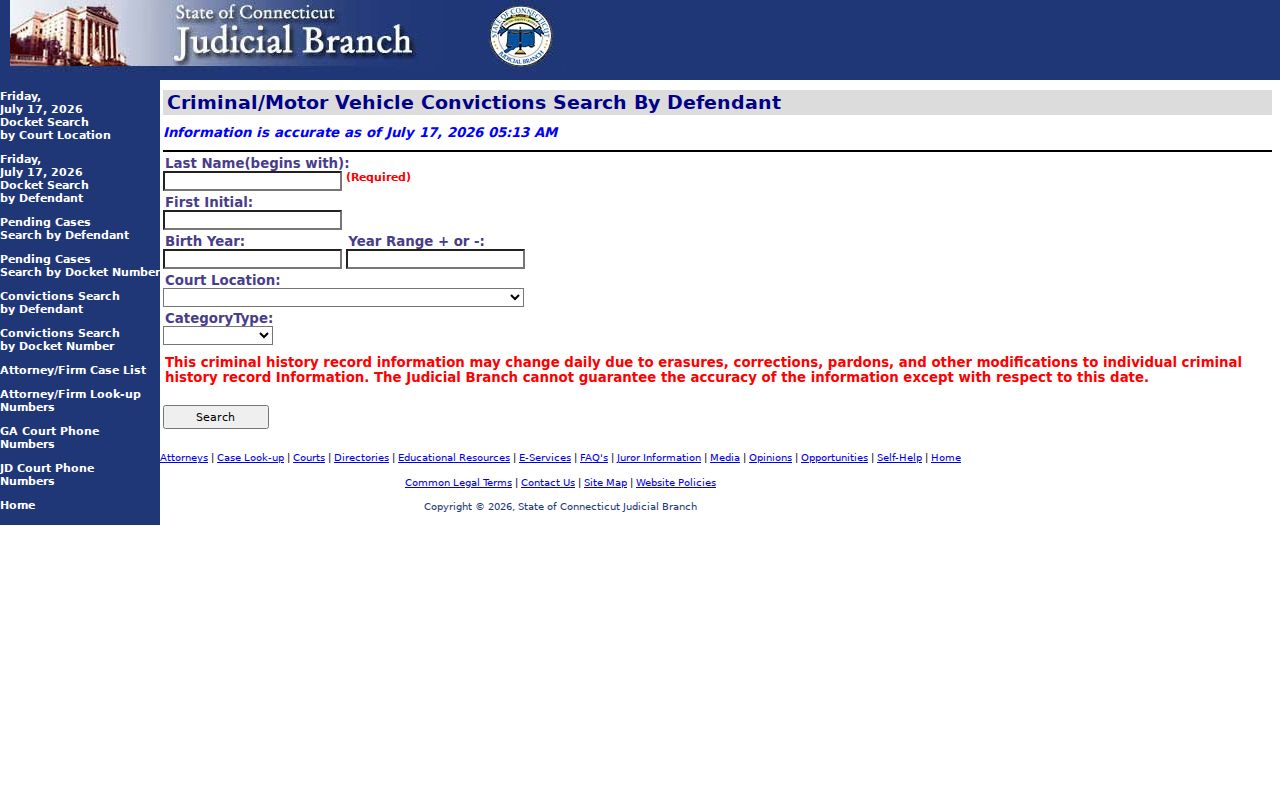
Its distinct defendant and disposition fields show why a docket number and court location are valuable checks against a common name.
Litchfield Dockets and Pending Cases
A daily docket answers when and where a hearing is listed. It is a calendar, not a full history. The pending-case lookup follows open Litchfield County prosecutions, while the conviction tool focuses on qualifying disposed matters. Searching only one can miss the type of record sought. The Judicial Branch criminal page places these tools side by side.
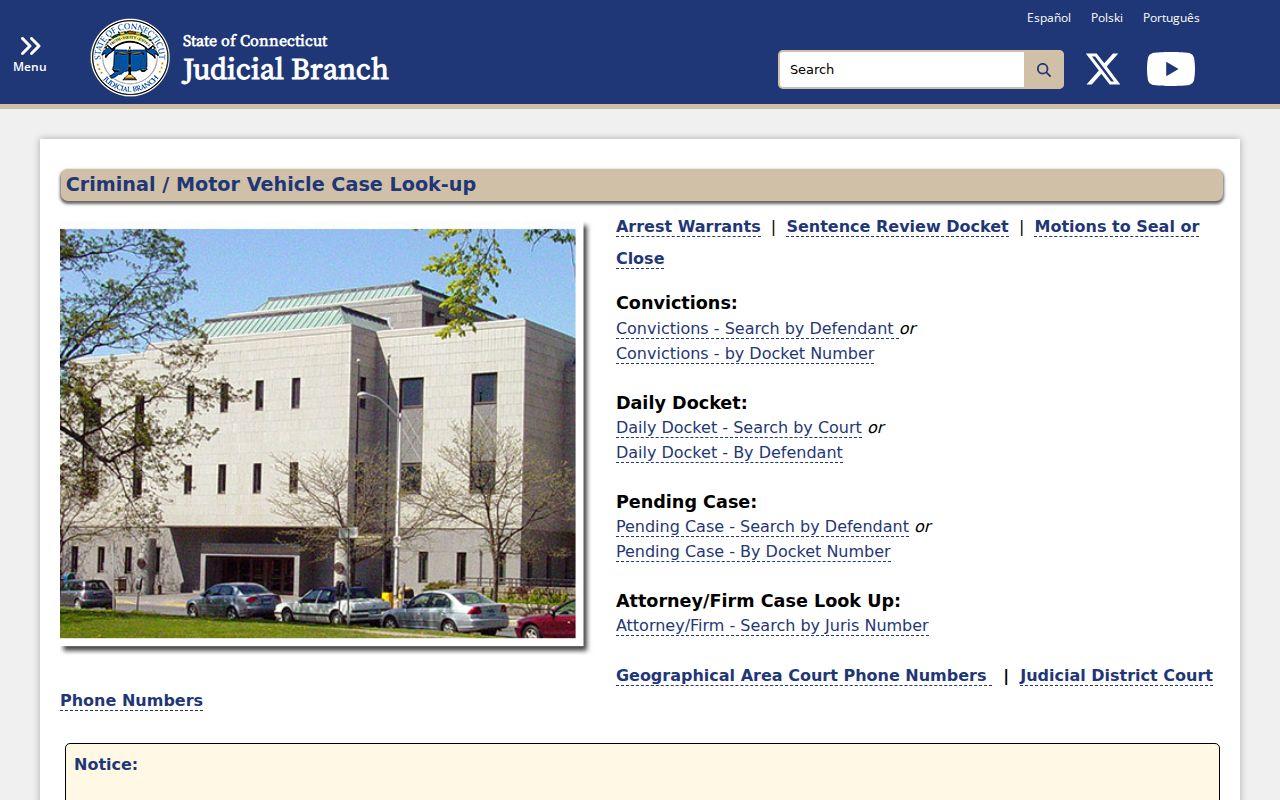
The menu reinforces that Connecticut does not offer one all-purpose court database. Use the daily docket for today's session, the pending lookup for an active file, and the clerk for documents.
Inside a Litchfield County Case File
A court file emphasizes judicial action. It identifies charges actually filed, court events, appearances, pleas, rulings, and the outcome. A police report instead records the incident and initial allegations, while an SPBI rap sheet organizes fingerprint-linked arrest cycles and reported outcomes. Not every pleading or police document is downloadable from a public docket, so the online view is an index and summary rather than a guaranteed scan of the complete file.
| Case Number & Court | The unique docket and Torrington court location used to identify the file. |
|---|---|
| Charging Document | The information, complaint, or other filed instrument stating the prosecution's charges. |
| Docket Entries | A dated history of appearances, motions, pleas, and judicial action. |
| Hearing Dates | Past events and the next scheduled court date for a pending case. |
| Disposition & Judgment | The outcome for each charge, such as conviction, acquittal, dismissal, or nolle. |
| Sentence & Conditions | Incarceration, suspended time, probation, restitution, and financial orders where public. |
Litchfield County Disposition Terms
Read every charge line separately. A disposition is the operative outcome of a charge, while a sentence is the consequence imposed after a conviction. “Nolle prosequi” means the prosecutor declared that the state would not proceed at that time. It is not a guilty finding. A dismissal ends the charge without conviction, and an acquittal is a not-guilty decision after trial.
Connecticut erasure rules can later remove qualifying nonconviction records from ordinary public access. A missing result therefore does not prove that no case ever existed. It may reflect erasure, confidentiality, a spelling issue, the wrong search tool, or an archived file. Ask the clerk about the search method without demanding disclosure of a record the law makes unavailable.
CCHRS can appear during an authorized fingerprint or pardon workflow, but it is not the public court docket. The CCHRS pre-enrollment interface requires a service code supplied by the responsible program.
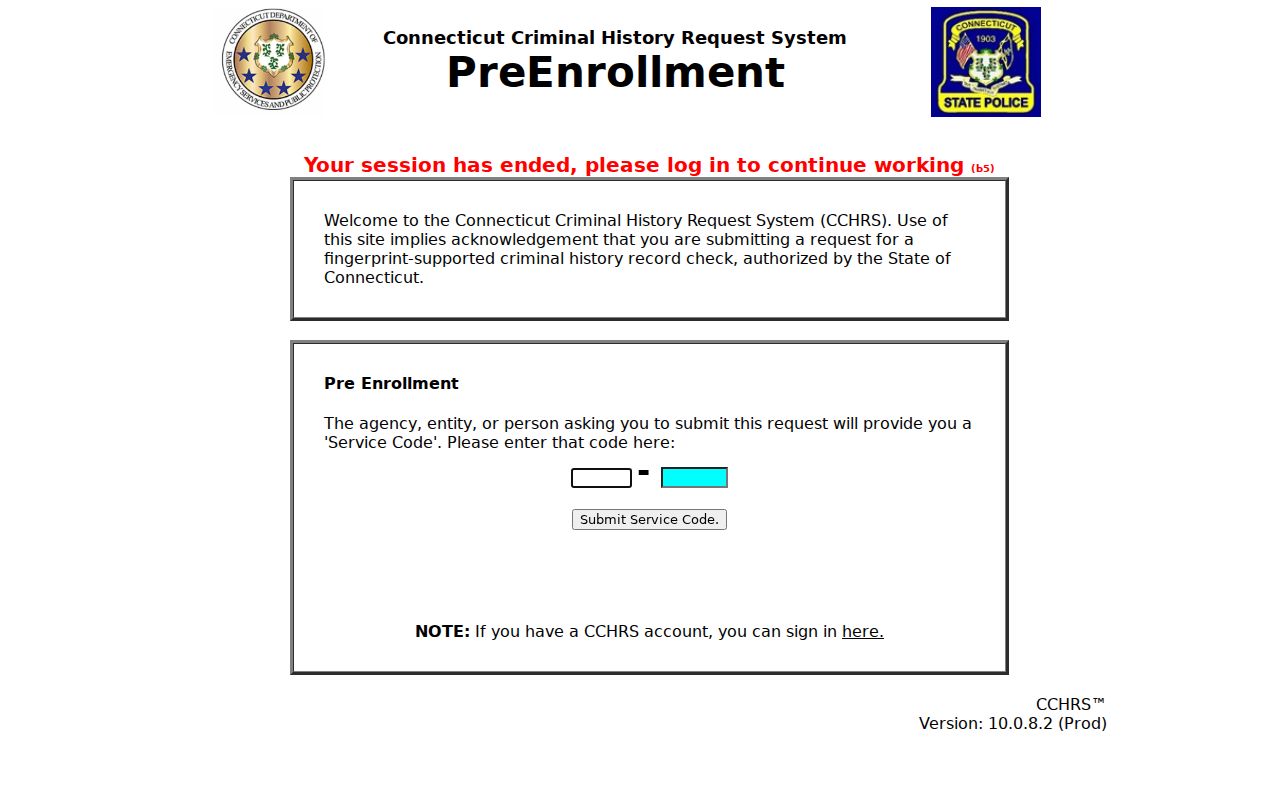
The screen belongs to a repository-service workflow. It cannot replace the free Judicial Branch search for a Litchfield County court docket.
How a Criminal Case Moves
Police make an arrest or seek a warrant, but prosecutors determine what is filed. At arraignment, the court addresses the charges, plea rights, release conditions, and the next event. Pretrial work can include discovery, motions, and negotiations. The matter then resolves by plea, dismissal, nolle, or trial. A conviction leads to judgment and sentencing, and later entries may concern probation, restitution, or appeal.
Case flow: Charges Filed › Arraignment › Pretrial › Plea or Trial › Disposition › Sentencing
The court timeline should not be inferred from the arrest report. Initial arrest charges can be changed, and the filed docket is the record of what the state pursued.
Each count can move on its own track. One charge may be dismissed while another ends in a plea, and the sentence belongs to the count of conviction. Later probation proceedings also receive docket entries. Reading only the first listed charge can therefore give the wrong account of a multi-count Litchfield County criminal case. Record the status and outcome beside each statute, then compare the judgment and sentence fields.
Litchfield Court Files and Police Reports
A probable-cause narrative or incident report is not automatically attached to every online Litchfield County docket. Request a municipal report from the police department that created it. State Police reports use DESPP Reports and Records and its GovQA process. The court clerk supplies judicial filings, not the arresting agency's full investigative file.
This division also affects access rules. Executive and municipal police records fall under Connecticut FOIA, subject to exemptions and redaction. Judicial records follow court statutes, Practice Book rules, and Judicial Branch policy. If a docket answers the outcome but not what officers reported, the next request goes to the arresting agency.
The same distinction applies to certification. A certified court judgment comes from the criminal clerk. A certified or authenticated police record must come from its law-enforcement custodian under that office's procedure. Asking the State's Attorney for the clerk's official case copy adds an unnecessary stop, even though both offices are at 50 Field Street.
Federal Cases Outside Litchfield Dockets
A federal prosecution arising in Litchfield County will not appear merely because someone searched the Connecticut Judicial Branch. The official federal source is PACER and the U.S. District Court for the District of Connecticut. PACER requires an account and follows the federal judiciary's fee rules.
The District of Connecticut site identifies the federal court and its services.
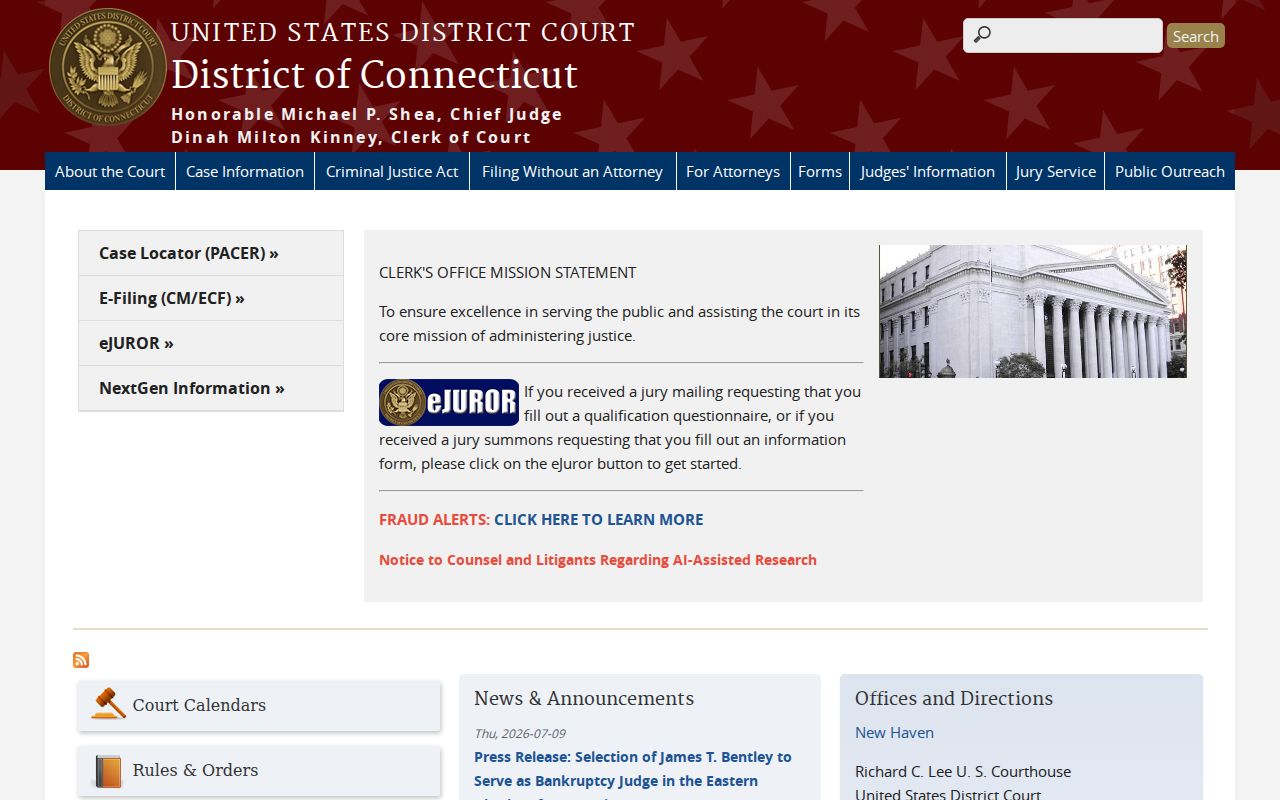
Use that channel only when the charge or agency points to federal jurisdiction, rather than treating it as a second copy of the Torrington docket.
The federal judiciary's PACER portal is the official docket search entry.
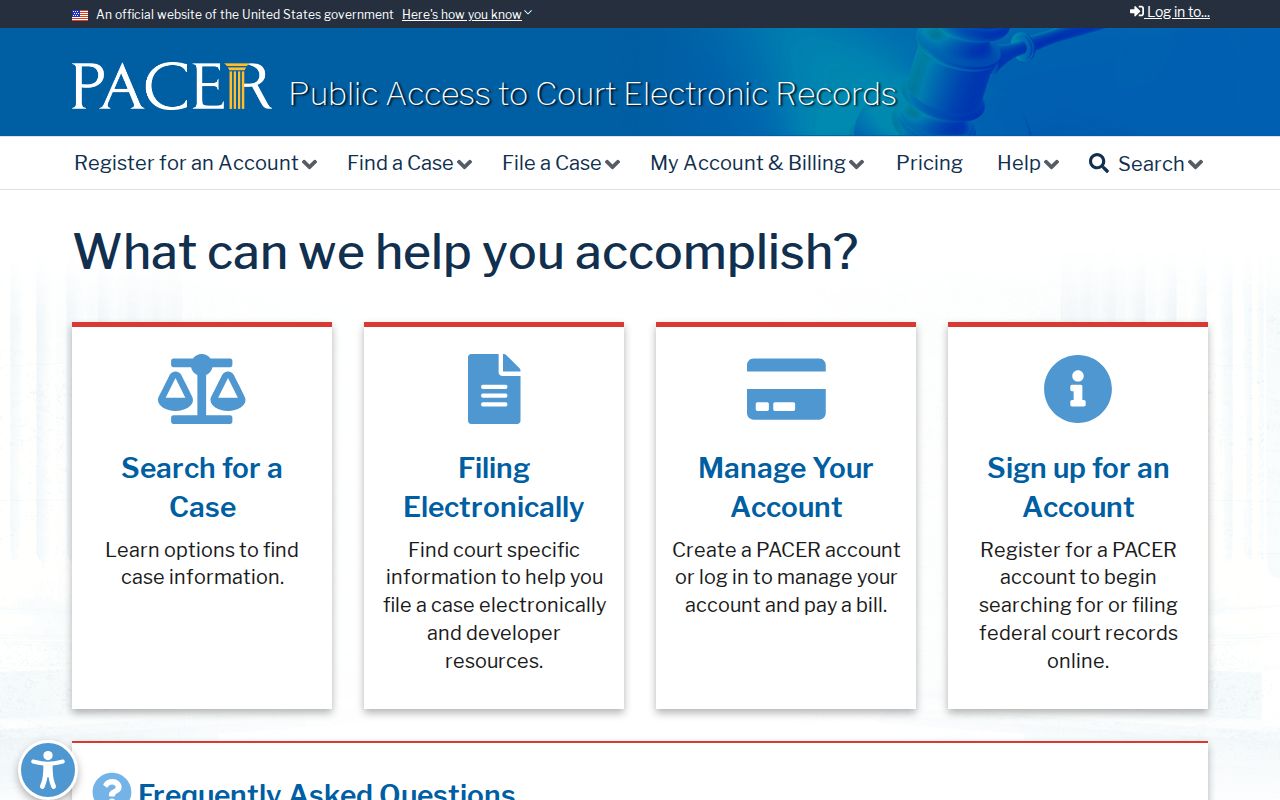
PACER covers federal records, while the Connecticut tools cover state Superior Court files. Keeping those systems separate prevents false gaps.
Case Record Access and Restrictions
Public Litchfield County court records are generally available, but access has firm limits. Erased cases, juvenile and youthful-offender matters, protected victim data, financial-account details, and other confidential information are omitted or redacted. Connecticut Practice Book rules govern criminal-file handling alongside state law and Judicial Branch policy. Online access can also show less than the courthouse file.
Under CGS §1-210, public records carry a presumption of access subject to stated exemptions. Court records are not handled through the Freedom of Information Commission in the same way as municipal executive records. For a public document that is not online, provide the clerk with the docket number and ask about inspection, an ordinary copy, or certification. For broader county record context, see the Litchfield County criminal history overview.